










The next decade will not only redefine how brands sell, but it will also radically change why people buy. We are fully entering the era of purpose, a time when consumption habits are transforming at a rapid pace.
If you are wondering where we are heading, the short answer is this: in 2030, digital sales will stop feeling like a mechanical process and become a conversation. An invisible, contextual, and, above all, natural conversation.
Today, Artificial Intelligence (AI) is already decisive, but by 2030 it will be the invisible engine behind everything. And no, it is not coming to replace humans, but to empower them. The salesperson of the future will need to be more empathetic, faster, and much more accurate.
«The future of sales won’t be about selling faster, but selling with more context, empathy, and precision.»
— José Luis Pascual, COO of Convertia
Below, we analyze the key factors that will differentiate the companies leading the market from those left behind.
Why do current sales strategies fail?
Before looking at 2030, we must understand the mistake of 2025. We have detected that many companies are still optimizing the wrong process. They invest resources in accelerating things that are already working poorly:
- Forms that no one wants to fill out.
- Mass emails that no one reads.
- Rigid chatbots that frustrate the user.
The error lies in chasing leads by volume rather than quality, and in measuring clicks as if they were revenue. Companies that understand the future will build relationships based on trust, moving beyond aggressive remarketing strategies.
What is «Agentic AI» and how will it change customer service?
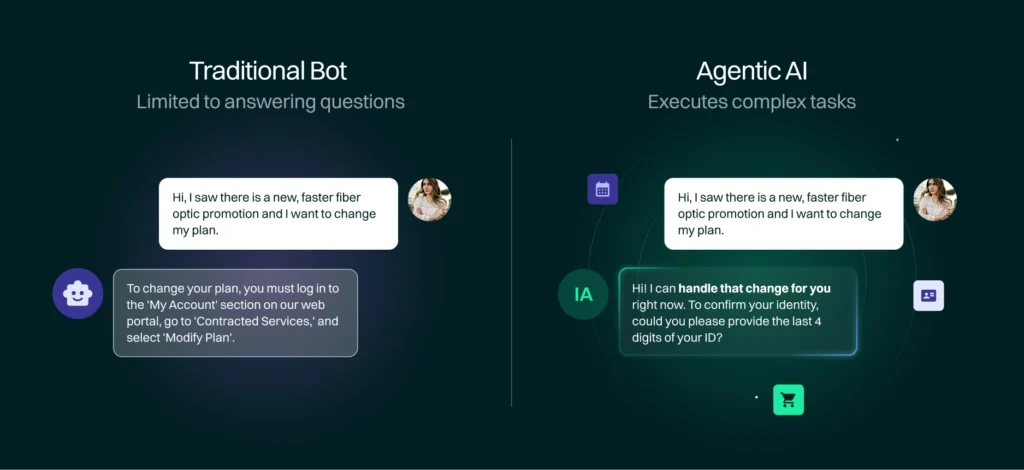
Many current chatbots have a problem: they seem like chatbots.
However, the agentic AI that is already beginning to be deployed does not just respond or interpret: it executes. It detects a need and has the autonomy to act: it updates the CRM, reserves stock, schedules an appointment in the sales director’s calendar, or processes a full return. It moves from being a passive chat to a proactive collaborator working 24/7. Its greatest achievement will not be closing more sales, but achieving better experiences.
In this new scenario, AI manages the routine, allowing human teams to focus on what truly adds value: empathy, creativity, and the intuition needed to close complex negotiations. It is not just efficiency; it is strategy.
Predictive sales: How to turn data into customers?
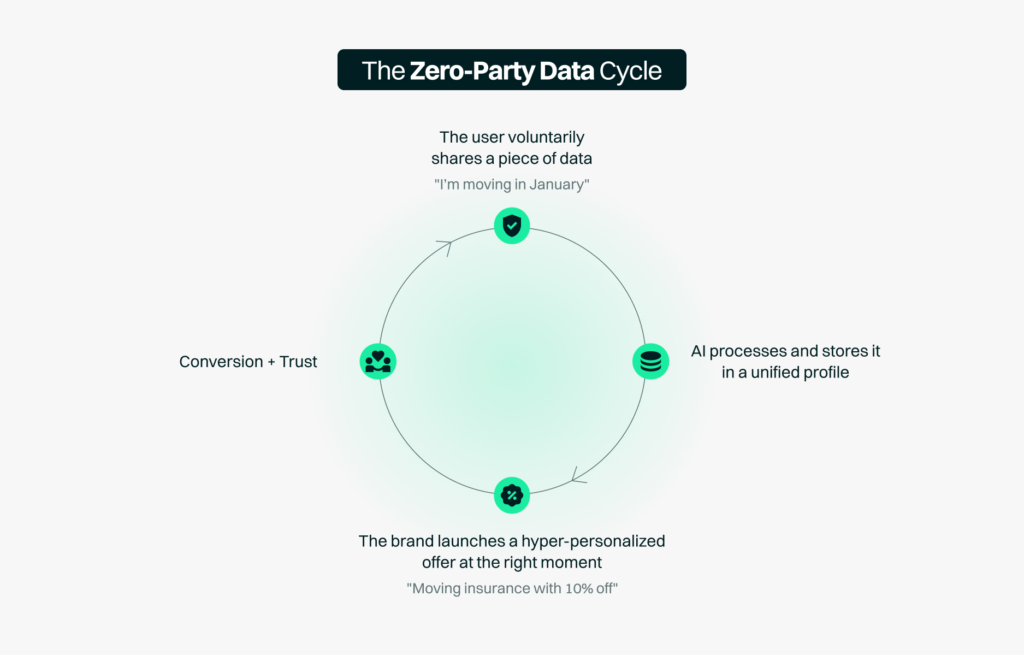
Having a CRM full of data is useless if that data doesn’t «talk» to each other. Data that does not predict is worthless.
In 2030, the advantage will not lie in ‘spying’ on user behavior via cookies (which will have disappeared by then), but in managing Zero-Party Data: information that the customer shares voluntarily because they trust the brand. AI will use this data not to chase, but to anticipate. If a user told you three months ago that they were moving, the system will offer home insurance on the exact key date, without them having to search for it.
We are moving from chasing the client to appearing with strategic precision at the exact right moment.
Social networks no longer just inspire. Now they close sales.
Social commerce is not the future. It is the present, and it represents a massive opportunity for many companies.
Forget about viewing social networks merely as showcases for static photos. In 2030, social commerce will integrate the entire cycle into a dynamic format. Interaction will no longer be just written text; it will be bidirectional video commerce and voice.
You will be able to ask your device aloud about a product’s material and receive an immediate answer, or activate a video call with an advisor (human or digital) with a single touch. Everything will happen in the same space:
- Inspiration.
- Live assistance.
- Virtual try-on.
- Immediate payment.
All without leaving the app. But there is a key condition: the brand must stop sounding like a brand. Communities will trust human voices and other real users, and they will be much more critical of paid influencers and campaigns recognizable as such. Therefore, it is key to use relatable messaging that genuinely connects.
«Growth will come from brands’ ability to turn conversation into conversion.»
— Sergio Porragas Moreno, CEO of Convertia
The difference between a brand that sells on social media and one that merely posts content will lie in its ability to integrate invisible technology: conversational AI, native payments, predictive recommendations. Everything orchestrated so that the user doesn’t even notice they are buying.
What is true omnichannel (and why will it stop being called that)?
We keep talking about «omnichannel» because it continues to be a headache. The user hates repeating their story when moving from Instagram to WhatsApp and then to a phone call. That is fragmentation.
In the future—and we are actually very close—technology will be invisible. The user’s context will travel with them. The channel won’t matter; the system will know who they are, what they need, and what they said five minutes ago on another platform. Continuity will be absolute.
The intelligent seller: When technology empowers empathy
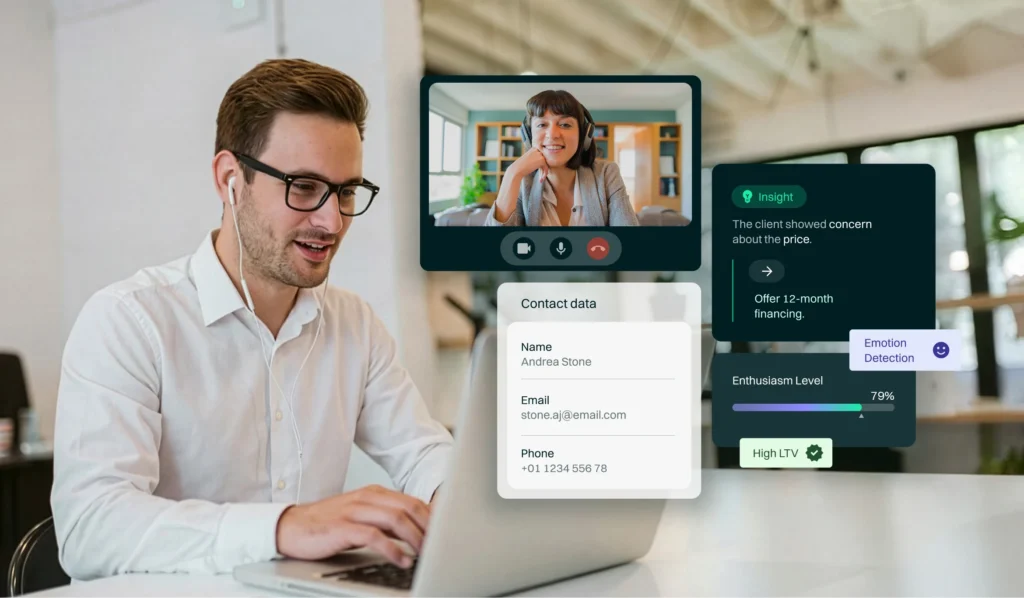
There is a myth that technology dehumanizes. in reality, the opposite occurs. We are talking about commercial copiloting: salespeople who see emotional signals, argument suggestions based on data, and closing predictions on their screens in real-time.
Technology does not replace empathy; it makes it scalable. It allows the human to anticipate objections and personalize treatment without losing authenticity.
In fact, AI will enhance the most human part of the sales process: the ability to listen, interpret signals, and respond with emotional precision.
Transparency: The greatest sustainable competitive advantage
In 2030, trust will be the most valuable currency in the market.
Consumers will demand to know what is behind every click: how their data is used, what the environmental impact of their purchase is, and what values the company truly stands for. And they won’t ask this in a contact form: they will search for it on Google, cross-reference it on social media, and verify it with their community.
Brands that show this information proactively—digital footprint, product traceability, verifiable social commitment—will not only inspire trust: they will convert it into recurring revenue.
Sustainability will stop being a closing message and become part of the sales pitch from the very first contact.
2030 has already begun
The technology to achieve all of this (Agentic AI, unified data, social commerce) already exists. The challenge is not technological; it is a mindset challenge.
The companies that will dominate the market in 2030 are those that understand that, no matter how much technology we use, sales remains a human act: someone has a need, and someone else is willing to listen to resolve it.
At Convertia, we aren’t waiting for the future; we have been designing models for years where every interaction generates revenue and trust. The question is not whether you will be ready for 2030. The real question is: Are you ready for the customer who has already changed in 2025?